
How fast fashion is polluting our oceans and hurting sharks
Yes, we're sparky shark marketing, and we've built our brand around these magnificent creatures.
But today, we need to have a serious conversation about how one of the world's largest industries is threatening the very animals we celebrate.
You might love a good shopping haul, but the fashion industry's environmental footprint goes way beyond what you see in your wardrobe.
Our oceans and the sharks that call them home are getting hammered by an industry that puts speed and profit over everything else.
Why sharks matter more than you realise
Before we dive into the pollution crisis, let's talk about why sharks are so important.
These incredible creatures have been swimming in our oceans for over 400 million years. They've survived ice ages, asteroid impacts, and countless environmental changes. They're basically the ultimate survivors.
And what makes them truly special? Sharks are the gardeners of the sea.
They keep fish populations in check, preventing smaller fish from overgrazing seagrass meadows. Those underwater grasslands? They're carbon storing powerhouses, absorbing massive amounts of CO2 from our atmosphere and locking it away in the seabed.
Without sharks, entire marine ecosystems collapse. And when marine ecosystems collapse, we lose one of nature's most effective weapons against climate change
The shocking scale of fashion's water pollution problem
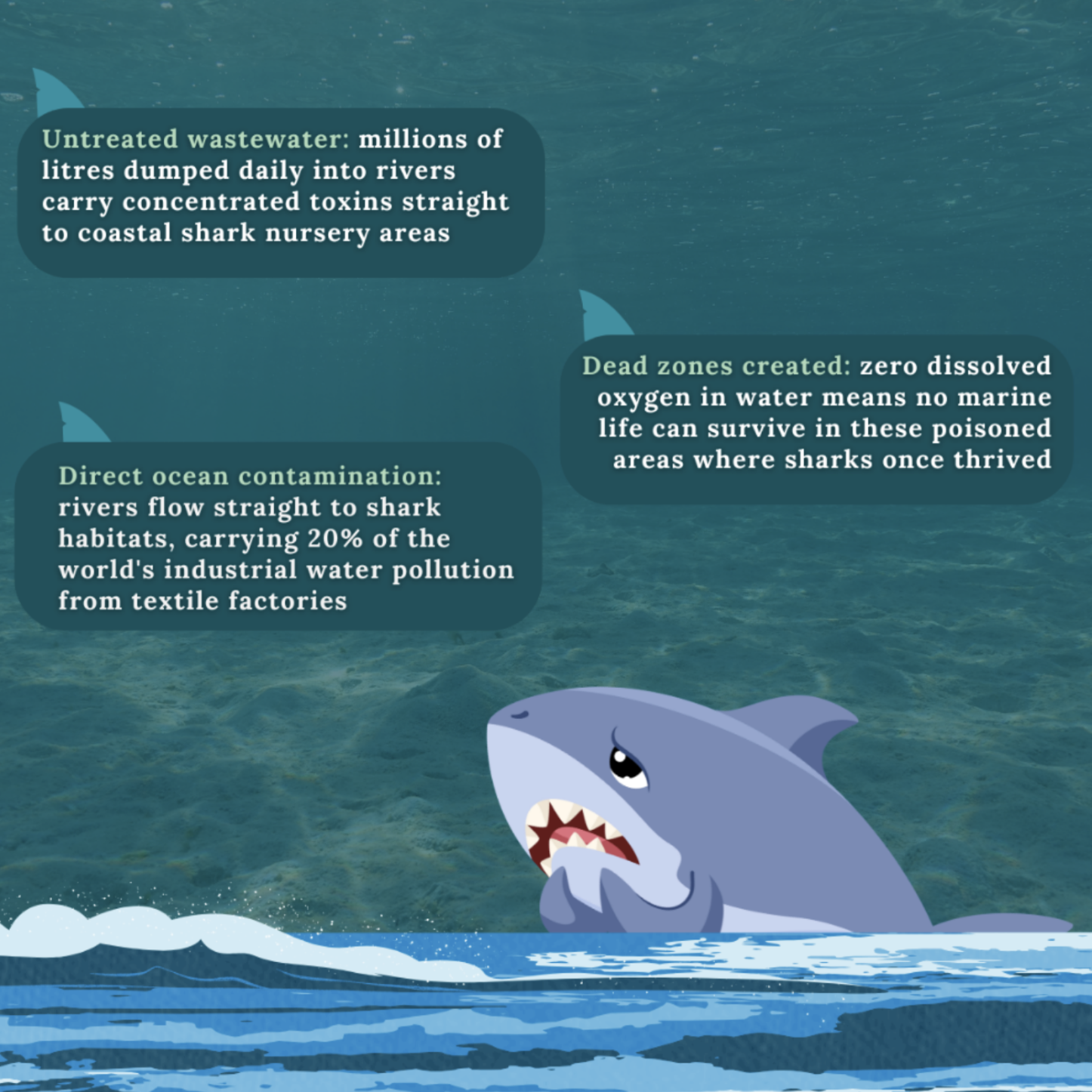
The textile industry accounts for roughly 20% of global water pollution.
One in five drops of polluted water comes from making our clothes.
The fashion industry guzzles 93 billion cubic metres of water every year. That's enough clean water to keep 5 million people hydrated for 12 months.
But it's not just about how much water they use. It's about what happens to that water after it gets contaminated with all the chemicals needed to turn raw materials into the clothes hanging in your wardrobe.
The toxic cocktail poisoning shark habitats
Chemical dyes are destroying marine ecosystems ⚡
Want to know what goes into making your favourite red dress or blue jeans?
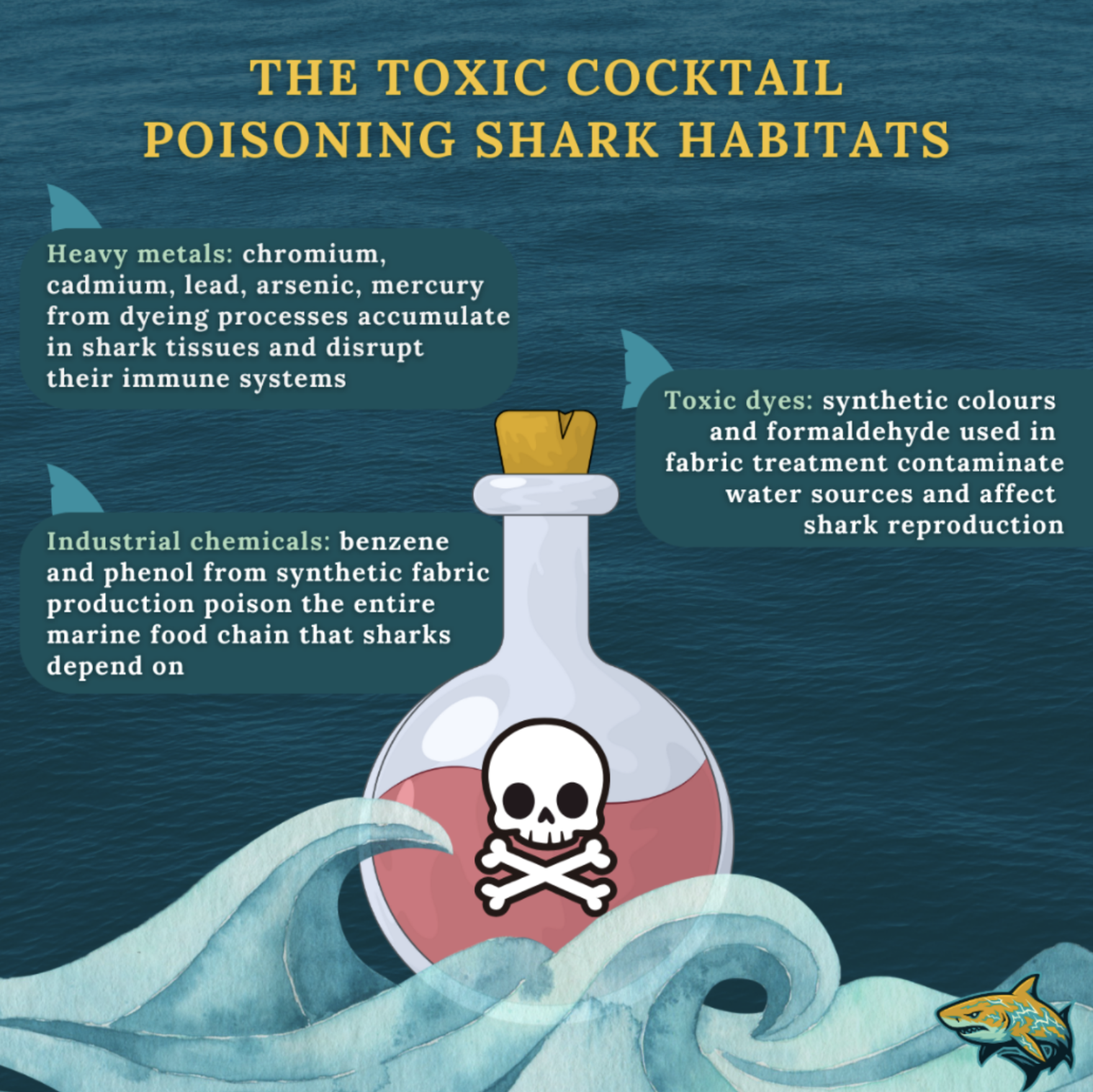
The dyeing and finishing processes introduce a dangerous mix of nasties into water systems.
We're talking about heavy metals like chromium, cadmium, lead, arsenic, and mercury. Plus toxic chemicals including formaldehyde and various synthetic dyes, along with industrial compounds like benzene and phenol.
Sharks can't escape the chemical contamination
When these toxic chemicals reach the ocean, they stick around in the water and sediment, affecting every single creature in the marine food web.
Sharks, being apex predators, get hit the hardest.
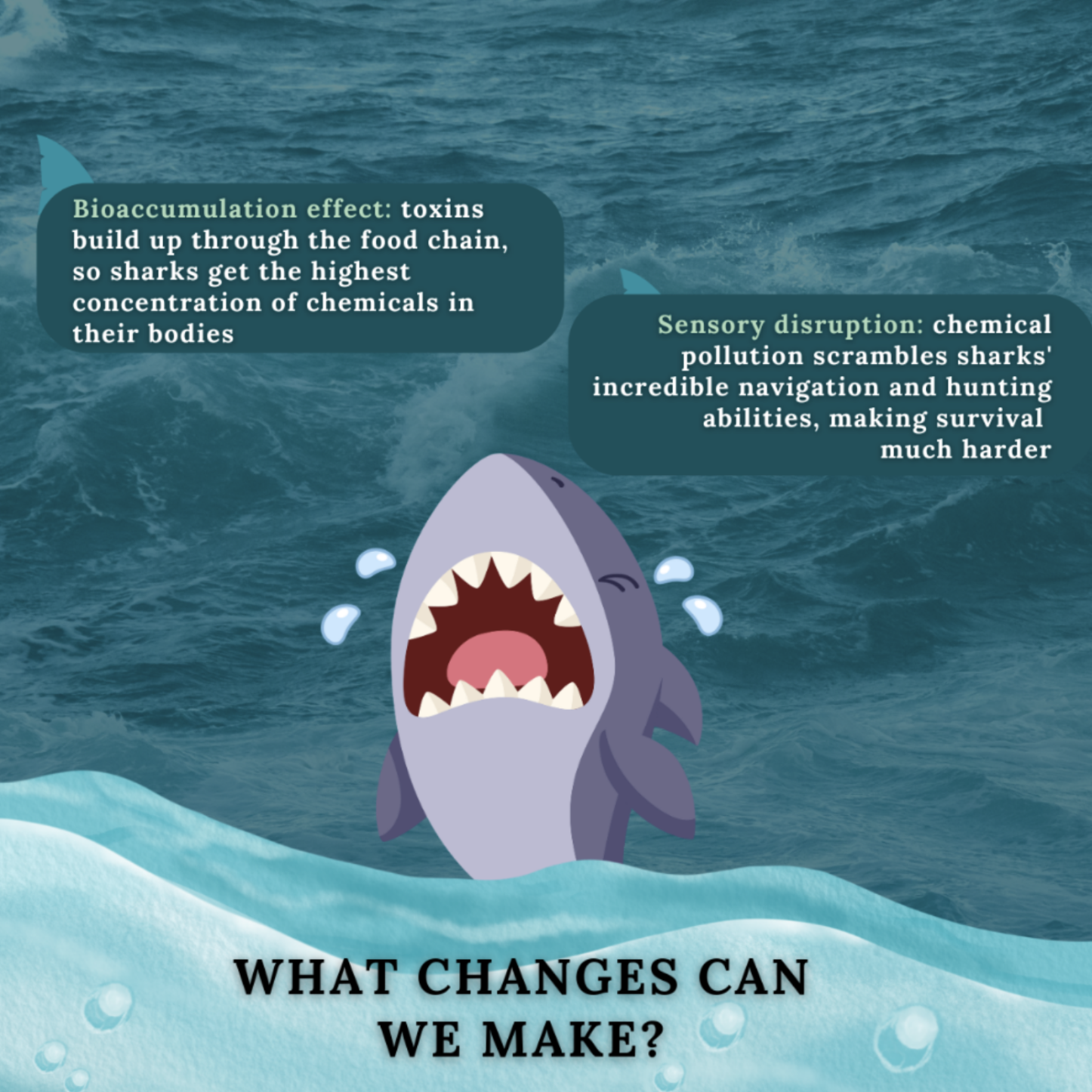
They accumulate these toxins in their tissues through everything they eat. It's like compound interest, but instead of money growing in your bank account, it's poison building up in their bodies.
Research has found traces of industrial chemicals in sharks around the world. These chemicals mess with their reproductive systems, immune function, and behaviour. Some sharks are struggling to navigate properly because the chemicals affect their incredible sensory abilities.
The microplastic nightmare choking our seas
This one's even more sneaky than chemical pollution.
According to the international union for conservation of nature, 35% of all microplastics found in the ocean come from washing synthetic textiles like polyester, nylon, and acrylic.
Every time you chuck your gym gear in the washing machine, tiny plastic particles break off. A single load of polyester clothes can release up to 700,000 microplastic fibres.
These particles are so small they slip straight through standard wastewater treatment plants and flow directly into the ocean.
Why microplastics are particularly bad news for sharks
70% of all clothing is now made from synthetic fibres. Polyester alone makes up 52% of all textile fibres. So this microplastic pollution isn't slowing down anytime soon.
Sharks don't directly eat microplastics, but they end up consuming them anyway.
Here's how:
Plankton and small fish gobble up the microplastics.
Bigger fish eat the smaller fish. Then sharks eat the bigger fish.
By the time it reaches a shark, those microplastics have travelled through multiple levels of the food chain, picking up more toxins along the way.

The sensory confusion crisis
Sharks have some of the most sophisticated sensory systems on the planet. They can detect electrical fields from other animals' heartbeats. They can smell a drop of blood from miles away. They have lateral line systems that feel tiny changes in water pressure.
But microplastics and chemical pollution are scrambling these finely tuned systems.
Imagine trying to navigate using GPS, but someone keeps jamming the signal. That's what's happening to sharks in polluted waters. Their natural navigation and hunting abilities get confused by all the chemical interference.
How fashion pollution destroys shark nursery grounds
Many shark species rely on coastal areas for breeding and raising their young. These shallow water nurseries provide protection and plenty of food for baby sharks.
But guess where most textile factories are located? Right along coastlines.
Chemical pollution from fashion manufacturing creates dead zones in these crucial coastal areas. When dissolved oxygen levels crash due to chemical contamination, the entire food web collapses.
Baby sharks either can't find enough food to survive, or they're born already contaminated with toxins from their mothers.
Some shark species are abandoning traditional nursery areas because the water quality has become too poor to support healthy development.
Imagine being born pre-poisoned!
The carbon connection
Remember how sharks protect seagrass meadows by controlling fish populations?
Well, the fashion industry contributes 10% of global carbon emissions. At the same time, it's poisoning the sharks that protect one of our most effective natural carbon storage systems.
It's like setting your house on fire while simultaneously destroying the fire department.
Seagrass meadows store carbon 35 times faster than tropical rainforests. But without sharks to maintain the balance, fish overgraze these underwater meadows, releasing stored carbon back into the atmosphere.
The numbers that'll shock you
🦈 20% of global industrial water pollution comes from textile dyeing
🦈 35% of ocean microplastics come from synthetic textiles
🦈 700,000 microplastic fibres can escape from one washing load
🦈 93 billion cubic metres of water consumed by fashion annually
🦈 10% of global carbon emissions come from the fashion industry
🦈 70% of clothing is now made from synthetic, plastic based fibres
🦈 Over 100 million sharks are killed every year (pollution adds to this pressure)
🦈 Some shark populations have declined by 90% in the last 50 years
Why sharks can't adapt fast enough
Sharks are incredible survivors, but they reproduce slowly. Most species don't reach sexual maturity until they're teenagers in shark years, and they only have a few babies at a time.
This slow reproduction rate served them well for millions of years when environmental changes happened gradually. But the rapid pace of chemical pollution and microplastic contamination from industries like fast fashion is happening faster than they can adapt.
When a pregnant shark accumulates toxins in her body, she passes them on to her babies. So pollution doesn't just affect individual sharks, it affects entire generations.
The ripple effect of losing sharks
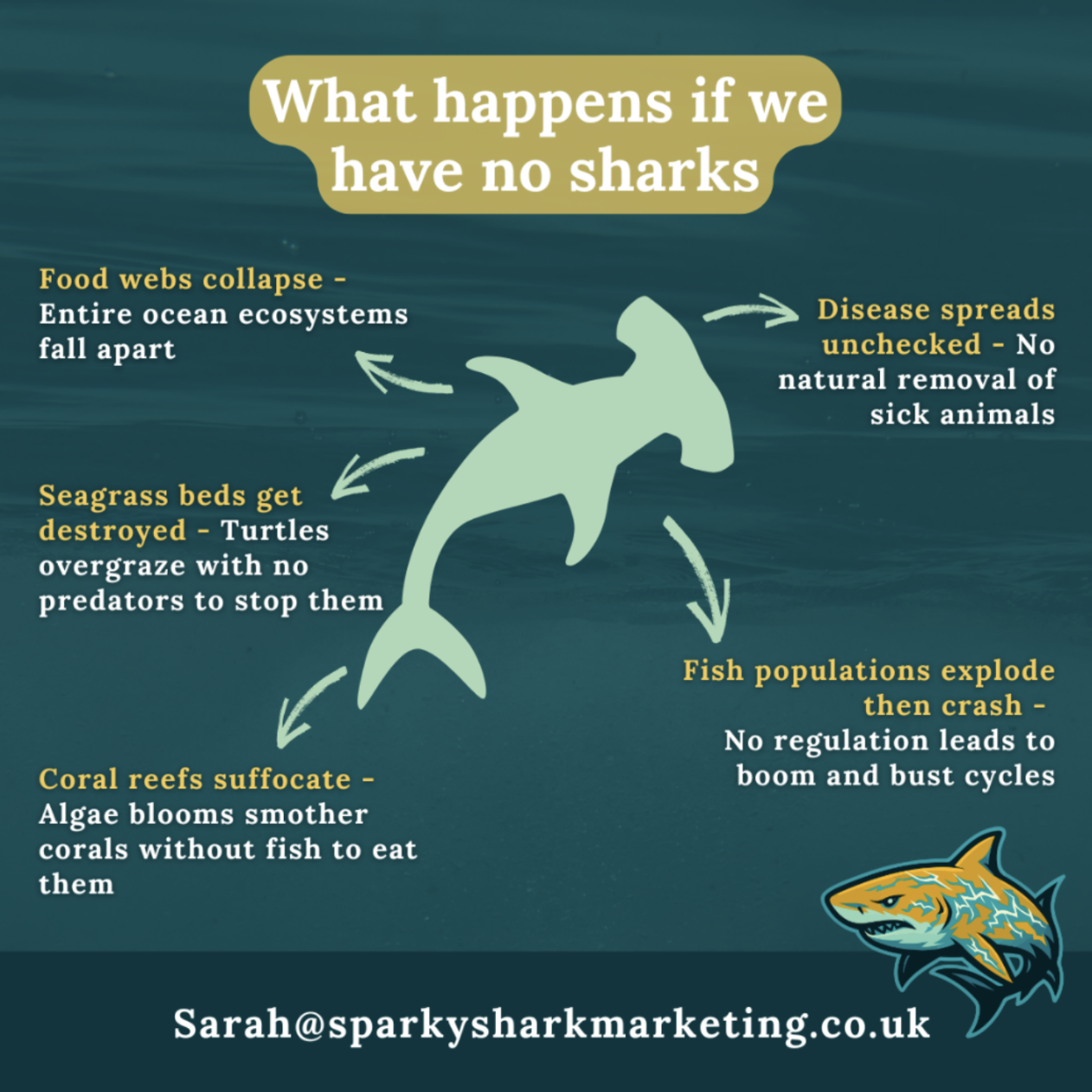
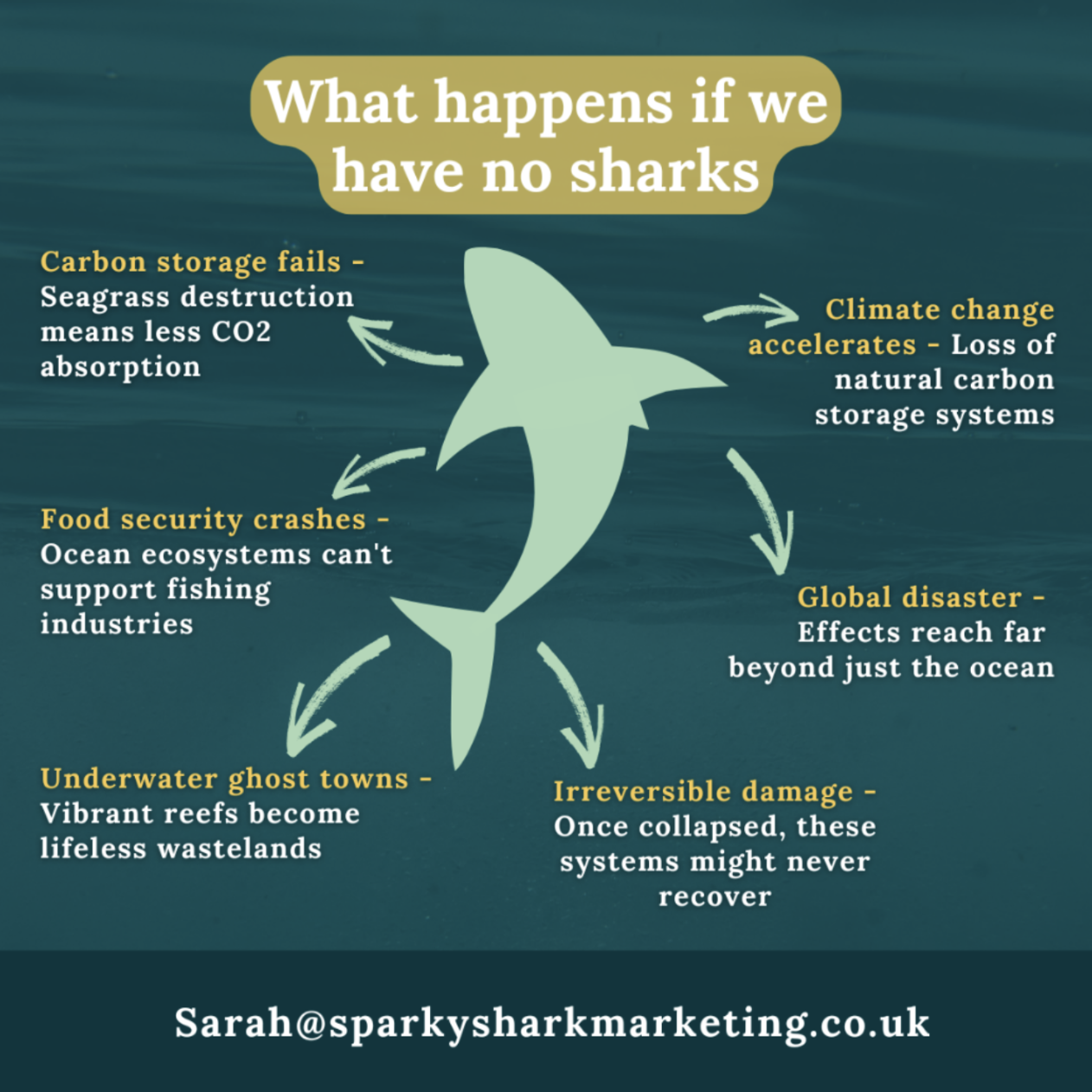
If we lose sharks, we don't just lose an incredible predator. We lose the entire balance of marine ecosystems.
Without sharks, medium sized fish populations explode. These fish then overeat the smaller fish that normally graze on algae. More algae means less oxygen in the water.
Coral reefs start dying. Fish populations crash. Coastal communities lose their livelihoods. And those carbon storing seagrass meadows? They disappear, releasing even more CO2 into our already overheated atmosphere.
What this means for you
We're not telling you to stop caring about fashion or expressing yourself through clothes. But understanding the true cost of fast fashion, including its impact on sharks and marine life, helps you make better choices.
Every time you buy something, you're voting for the kind of world and oceans you want to see.
When you choose that £3 top from a fast fashion retailer, you're supporting an industry that dumps toxic chemicals into shark habitats. When you wash your synthetic gym clothes, you're adding to the microplastic problem that's confusing shark navigation systems.
But we also have the power to make different choices.
Small changes, big impact for sharks
You don't need to completely overhaul your wardrobe overnight. But every conscious choice helps protect the sharks and oceans we all depend on.
