Organic marketing in 2026 and why it’s more important than your ad budget
If you’re a business owner who’s been told that throwing money at ads is the only way to grow your online presence, then this blog is for you.
Because organic marketing is one of the most powerful and cost-effective tools available to any business, and in 2026, with AI changing the way people search for and consume content, it’s becoming more important than ever.
At Sparky Shark Marketing, organic marketing is at the heart of everything we do. So, we’re going to walk you through what it is, why it works, what the data says, and why we’d back it as the foundation of any business that wants to build something with real depth rather than just paying to stay afloat.
What is organic marketing?
Organic marketing is any marketing activity that builds awareness of your business without paid promotion.
No ads. No boosted posts. No sponsored content.
It’s the content your audience finds on their own, because it’s useful, relevant, or interesting to them.
This includes blog posts (like this one), social media content, email newsletters, search engine optimisation, videos, and podcasts. The common thread is that you’re not paying to put your content in front of people. You’re earning their attention instead.
The goal, as HubSpot puts it, is to increase brand awareness and build a natural connection with your audience by sharing value and expertise. And the big difference between organic and paid?
Paid stops the moment you stop spending.
Organic keeps working long after you’ve hit publish.
Think about it this way: a well-written blog post or a piece of social content that genuinely helps your audience can bring in traffic, leads, and new followers for months or even years. A paid ad does the same job while you’re paying for it, and then it’s gone.
To give you a sense of the scale we’re talking about, research from BrightEdge, cited by HubSpot, found that organic search drives 53% of all website traffic. That makes it the highest performing marketing channel available. 53%, without a penny spent on advertising.
Organic marketing is growing, and the data backs it up
Organic social used to be treated as a nice win. Something businesses would get round to when they had time, after the ads were sorted and the budget was spent. That attitude is shifting fast, and the tide is turning in organic’s favour.
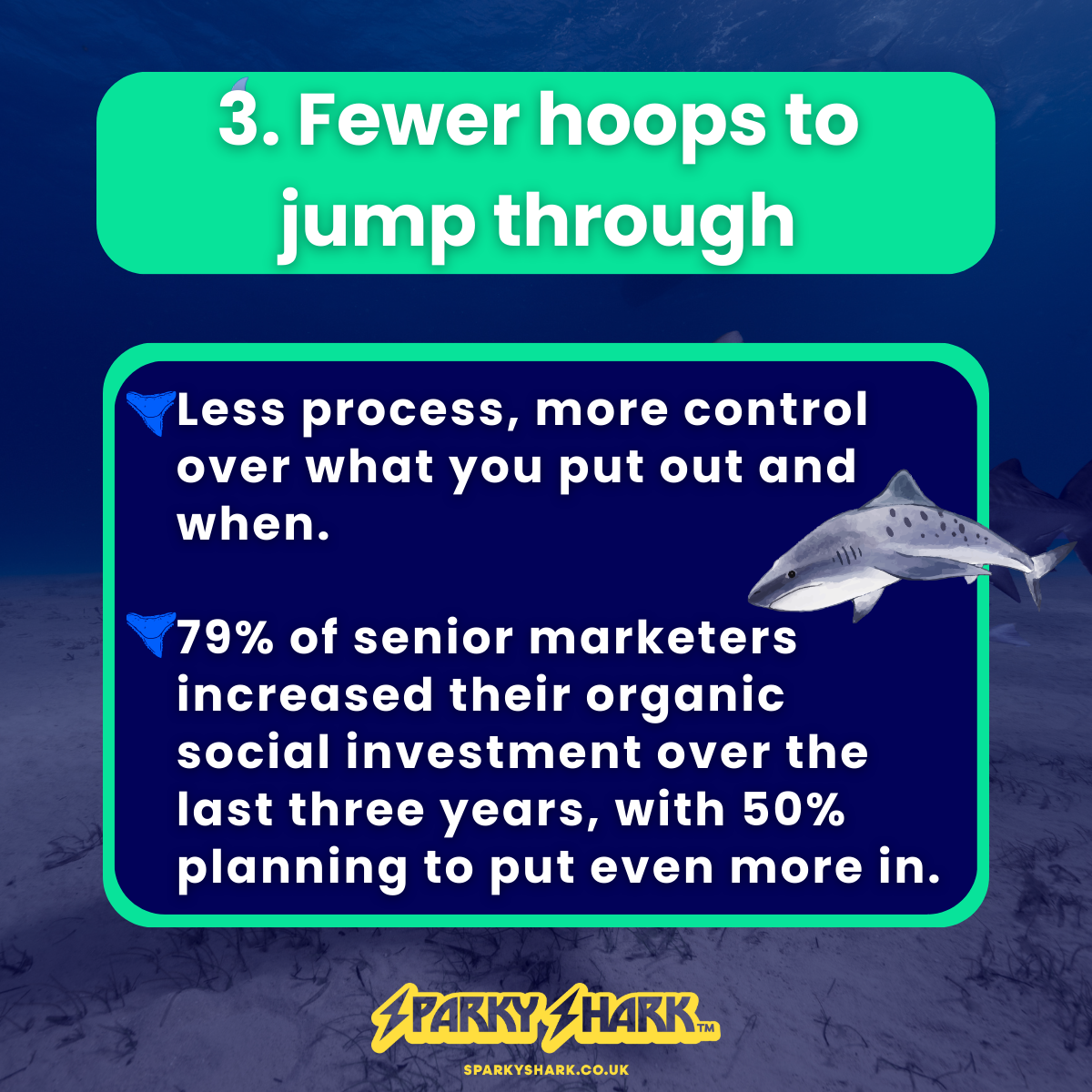
A report by VaynerX and Ipsos, based on a survey of 100 senior marketing leaders, found that 79% of marketers had increased their investment in organic social over the previous three years, with 50% planning to increase it even further.
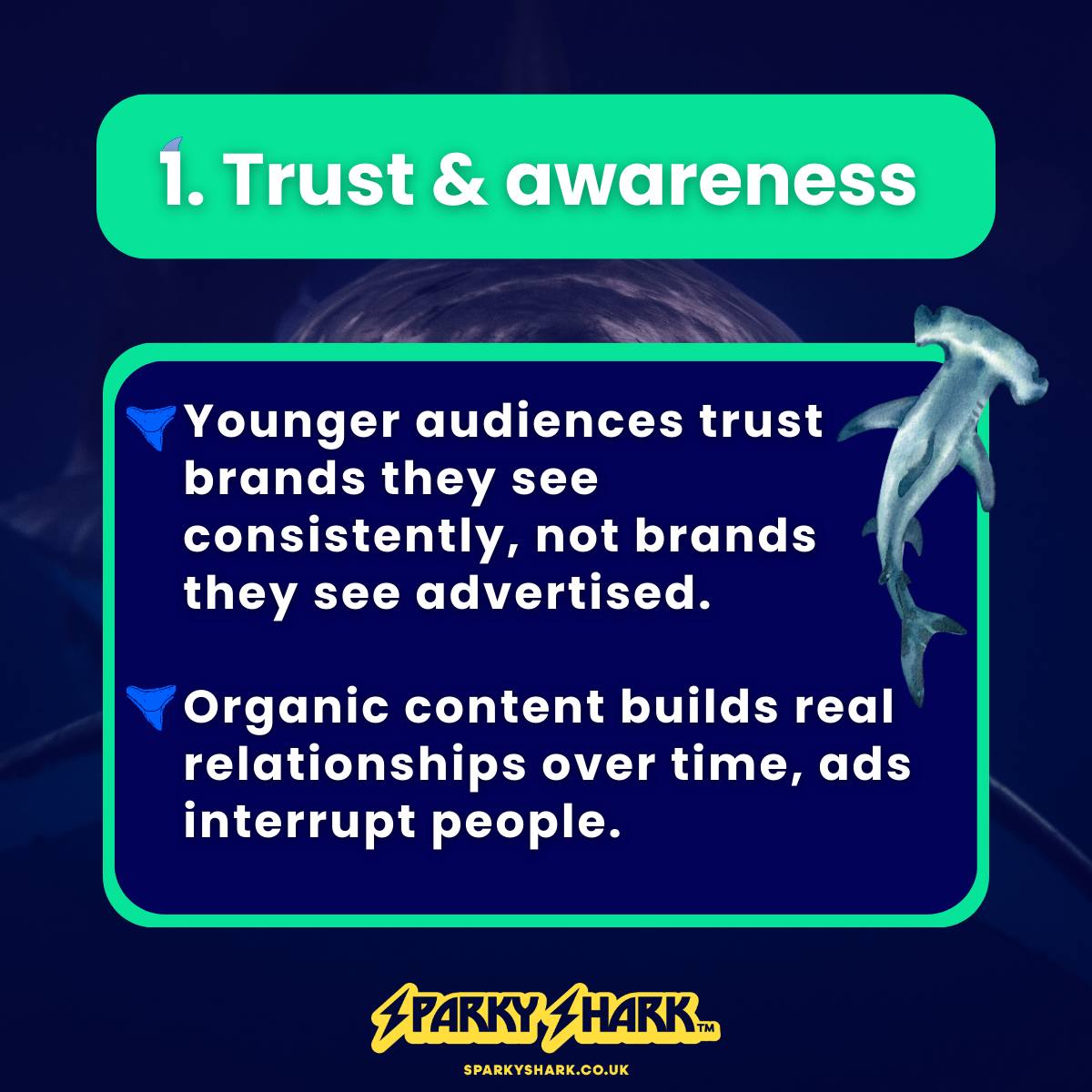
And when asked why, three key reasons came up: it’s important for building trust and awareness, especially with younger audiences; it’s cost-effective compared to paid alternatives; and it’s quicker and easier to produce than paid campaigns, which often involve agencies, budget approvals, and lengthy sign-off processes.
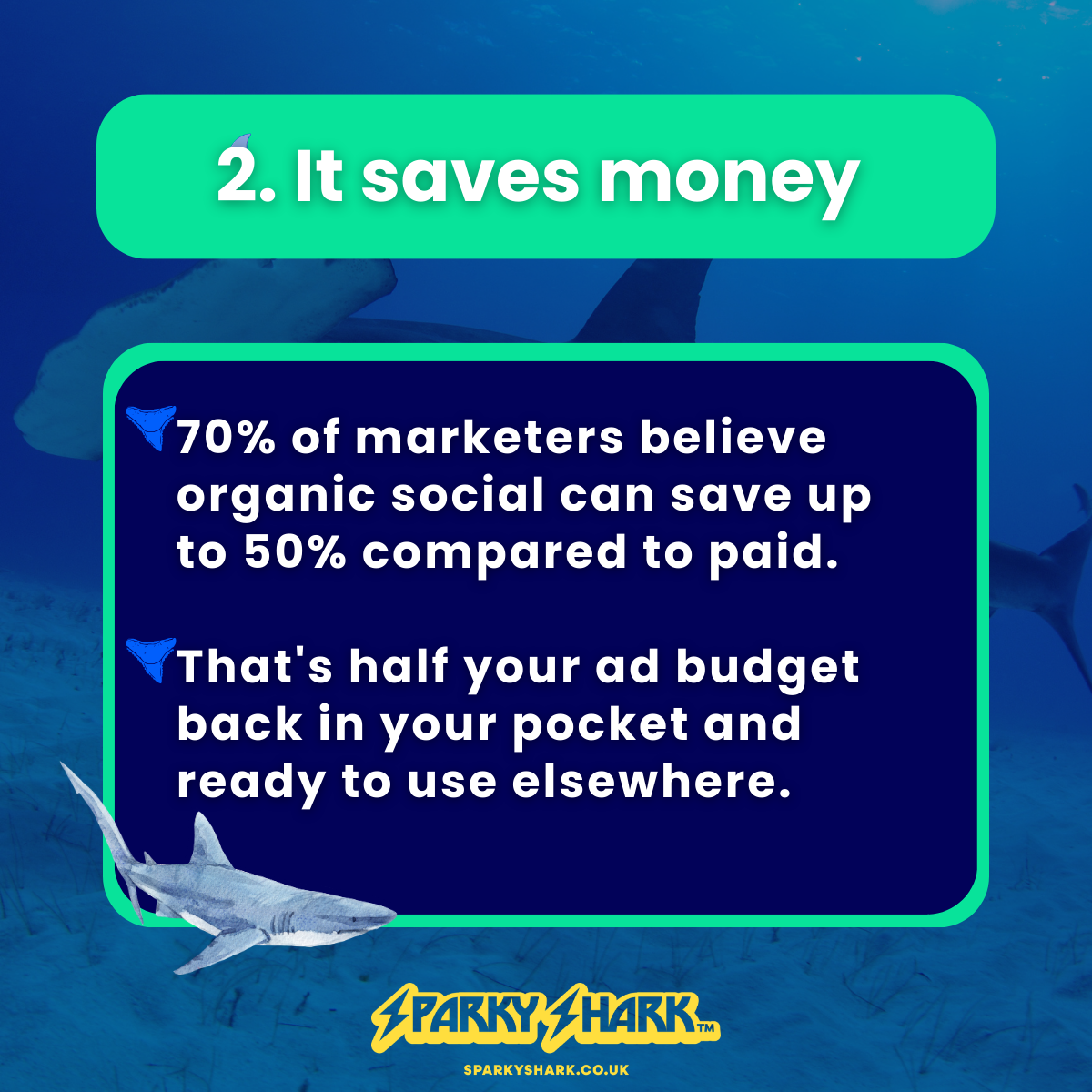
The same research found that 70% of marketers believe organic social can generate savings of up to 50% compared to paid. That’s a significant chunk of budget that could be reinvested elsewhere in your business.
Why AI is making organic marketing more valuable, not less
AI is everywhere right now, and businesses across every industry are using it to create content faster and at scale. We’re not here to tell you to never use it. AI has its uses, and we’ve written about that before. Just check out the blog.
But when every business is using the same tools to produce the same content, the whole internet starts to look identical.
Same structure. Same phrases. Same posts that make you want to scroll straight past. It’s boring people!
Your audience is fed up of reading content that’s been clearly spat out by a robot, and they’re getting very good at spotting it.
The businesses that cut through in this environment are the ones with a consistent, human, authentic organic presence. Content that sounds like a real person wrote it, because a real person did. That’s what builds trust, and trust is what turns followers into customers. Content that blends in is just chum in the water.
There’s also a search angle worth knowing about. HubSpot notes that nearly 60% of Google searches now end without a click, because users get their answer directly from AI overviews and featured snippets. This means brand visibility increasingly depends on being cited and recommended by AI systems, not just ranking in traditional search results.
What does organic marketing deliver for your business?
The VaynerX and Ipsos report found that 87% of marketers agree organic social supports brand awareness and discovery at the top of the funnel, while 84% agree it supports consideration in the middle of the funnel. It works across the whole customer journey, not just at one end of it.
Here’s what that looks like in practice:
🦈It builds trust over time.
When you consistently show up with useful, relevant content, your audience starts to see you as an expert in your field. You’re not interrupting their day with an ad they didn’t ask for. You’re there when they need you, with something worth reading. That’s a much stronger foundation for a business relationship.
🦈It generates leads without ongoing spend.
Once your organic assets are built, whether that’s a blog post that ranks well, a social following that engages with your content, or an email list that opens your newsletters, they keep generating leads without you having to keep paying for them. Paid ads stop the moment the budget runs out. Organic content doesn’t.
🦈It saves significant money.
70% of marketers in the VaynerX and Ipsos research said organic social can generate savings of up to 50% compared to paid alternatives. For small businesses especially, that difference matters.
🦈It tells you what your audience wants.
72% of marketers in the same research use organic social to test ideas and validate what’s resonating before making bigger investments. Your organic content is a real-time insight engine that shows you what your audience cares about, which makes everything else you do more effective.
🦈It builds your brand identity.
68% of marketers in the VaynerX and Ipsos research agreed that social assets are the new TV commercial. Every blog, every post, every email is an opportunity to show people who you are, what you stand for, and why they should choose you over someone else.
Organic vs paid: which should you choose?
We’re going to be upfront about something…we’re biased on this one.
Organic marketing is the foundation of what Sparky Shark Marketing was built on. Sarah, our founder, has been working in marketing for over six years, and building organic presence for businesses is a huge part of that. Sustainable brands, tech startups, luxury goods, recruitment firms. She’s seen what organic marketing can do when it’s done with consistency and a bit of bite.
So yes, our recommendation is to build the organic foundation first.
But that doesn’t mean paid has no place. If you’ve got a product launch, a time-sensitive promotion, or a very specific audience you need to reach quickly, paid marketing can do that in a way organic can’t match for speed. There’s nothing wrong with using both.
As HubSpot puts it, think of organic marketing as the default foundation and primary focus of your efforts, with paid used sparingly and strategically to enhance it. If someone visits your website organically, for example, you can retarget them later with paid ads. The two can and often should work together.
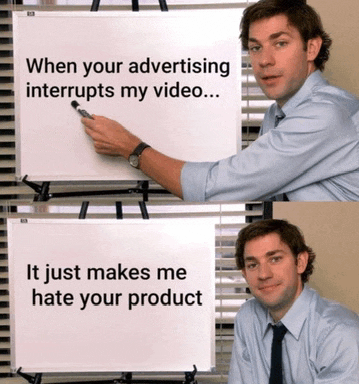
What we’d steer you away from is relying entirely on paid advertising while neglecting your organic presence. It’s an expensive way to run a business, and the moment you stop spending, you disappear.
Organic marketing is what gives your business staying power.
Organic marketing takes time
There’s no point pretending otherwise. Organic marketing is not a quick fix, and anyone who tells you it is, isn’t being straight with you.
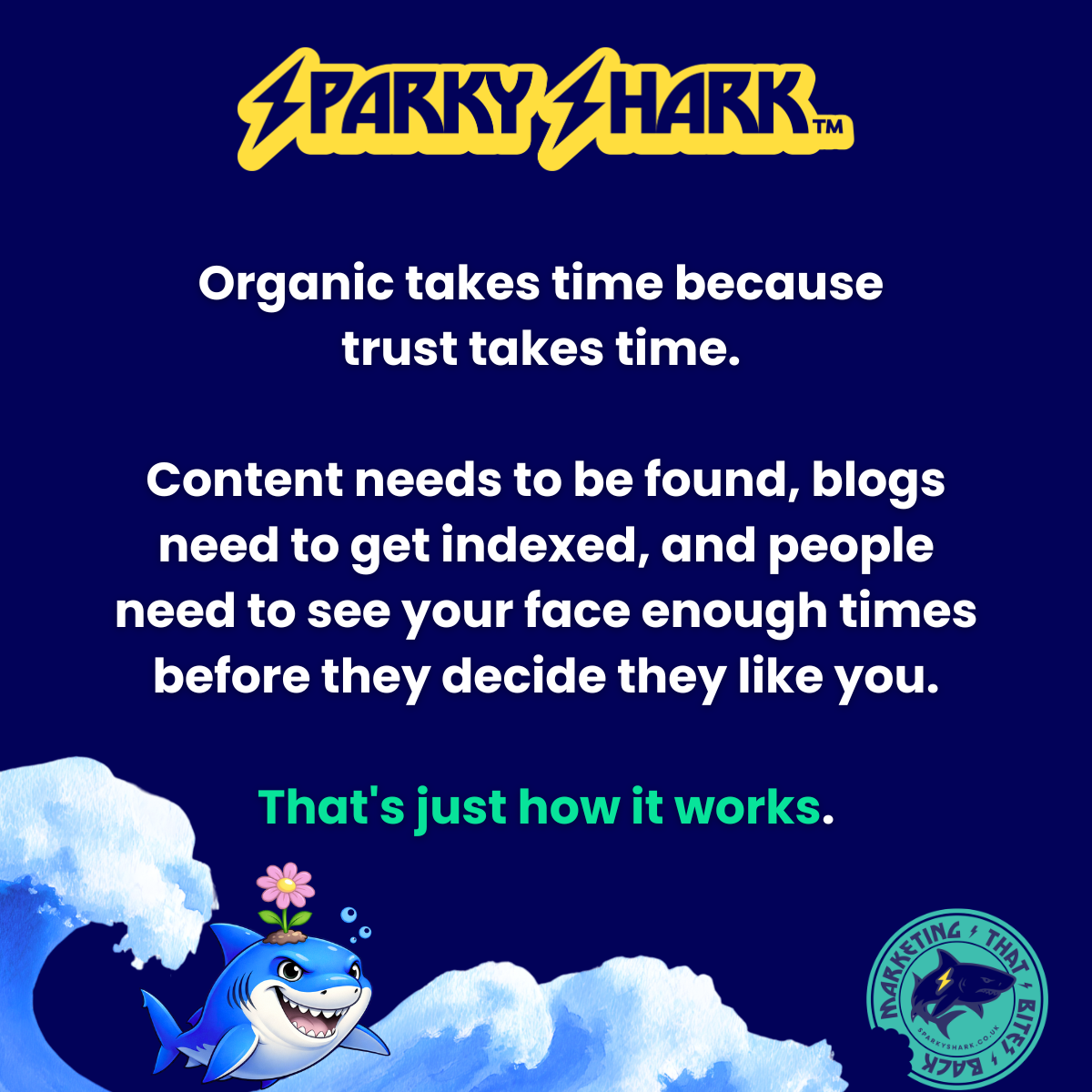
HubSpot reports that most businesses start seeing initial organic results within three to six months, with real momentum building after six to twelve months of consistent effort. Blog articles take time to get indexed by search engines. Building a social following takes time. Growing an email list takes time. These things compound over months and years, and the results are worth it, but patience is part of the deal.
Sharks don’t become apex predators overnight, and your organic presence is no different. The businesses that give up after a few weeks and decide organic doesn’t work are usually the ones who weren’t consistent, or who expected paid ad results from an organic strategy. Organic marketing is a long game. But once you’re established? You’re the apex predator in your space. 🦈
How Sparky Shark Marketing can help
This is what we do. We help businesses build an organic presence that sounds like them and connects with the right people.
Sarah has been writing and creating content for over six years. She knows how to build content that attracts your ideal audience, builds trust, and generates leads over time, whether that’s through social media, blogs, LinkedIn articles, email newsletters, or developing a brand voice that people recognise and respond to.
We know organic marketing inside out.
We’ve seen it work across industries, and we know how to make it work for you. In a world where AI content is flooding every platform and most of it sounds exactly the same, having a human, authentic, consistent organic presence is the thing that makes your business stand out.
If you’d like a chat about what that could look like for your business, get in touch. We’d love to help. 🦈
sarah@sparkysharkmarketing.co.uk