
LinkedIn is now one of the most quoted sources in AI search, buyers are researching businesses for months before they get in touch, and the platform has been busy rolling out new trust tools, a comment shake up, a feed test and a crackdown on AI slop.
Every one of these changes affects who sees your posts and whether they trust you enough to get in touch.
In this blog, we break down why LinkedIn deserves your time more than ever, what's changed, and the simple things you can do to turn these updates into more clients (with plenty of sharks along the way).
When did you last have a good look at your LinkedIn?
Because other people are looking at it a lot more than you think.
Future clients are scrolling through your posts. And the AI tools your buyers are asking for recommendations are reading them too.
Meanwhile, LinkedIn has been busier than a shark at a sardine run over the last couple of months, and some of its changes could shape who sees your posts from here on in.
For business owners, that's good news.
The platform is making more room for real people with real stories, and that's exactly where your next client is scrolling.
Some of these changes are already in your feed. Some are still being tested.
Grab a coffee (we're on our second already). Fins at the ready, let's dive in
🦈 Why LinkedIn deserves your time more than ever
Your buyers are doing their homework long before they pick up the phone.
On 24 September, LinkedIn shared research from Factors.ai, based on ad data from more than 850 B2B companies, plus over 50,000 closed deals worth more than $5 billion.
🦈 B2B buying groups explore possible solutions for around 124 days before they speak to a seller. That's about four months of research before anyone says hello, and your LinkedIn is one of the places they can size you up.
🦈 Reaching six or more contacts in a buying group before a deal even appears in your CRM can lift win rates by 17 percentage points. If you usually win two deals out of every ten, that's closer to four.
🦈 Around three quarters of LinkedIn ad spend (76%) targets director level roles and above, which means plenty of the other people involved in the buying decision get left on the shore.
🦈 Companies that combine LinkedIn Ads with organic LinkedIn activity achieve 2.4 times higher win rates than those running paid campaigns on their own. That's well over double.
A pinch of sea salt with these: Factors.ai is a LinkedIn Marketing Partner, so treat the figures as vendor reported trends rather than cold, hard proof. Even so, the tide is pretty clear.
Your posts and profile are doing a lot of the selling before you ever speak to anyone.
Paid ads with no organic content behind them are a shark trying to swim with one fin. Lots of splashing, not much getting anywhere.
Your buyers aren't only searching Google anymore.
They're asking ChatGPT, Google's AI Mode and Perplexity who to work with, and those tools are reading LinkedIn to find the answers.
Semrush analysed 325,000 prompts across those three tools earlier this year and found 89,000 different LinkedIn pages being cited in the answers.
LinkedIn came second out of every website cited, behind only Reddit, and ahead of Wikipedia, YouTube and major news publishers. On average, LinkedIn popped up in 11% of AI answers, which is roughly one in every nine.
Over in the software world, G2 surveyed more than 1,000 B2B software buyers in March and found 51% now start their research with an AI chatbot more often than Google, up from 29% in April 2025. That's gone from under a third to slightly over half in less than a year. Those buyers also named AI chatbots as the number one thing shaping their shortlists.
Good news for business owners: the AI tools aren't chasing viral posts.
Semrush found:
🦈For every 20 LinkedIn posts that get cited, 19 are original. Reshares barely get a look in.
🦈 The typical cited post had between 15 and 25 reactions, so you don't need to go viral to get noticed.
🦈 Knowledge sharing and practical advice make up the biggest share of what gets cited.
🦈 Smaller accounts still break through. People with fewer than 500 followers were at least as likely to be cited as those with more.
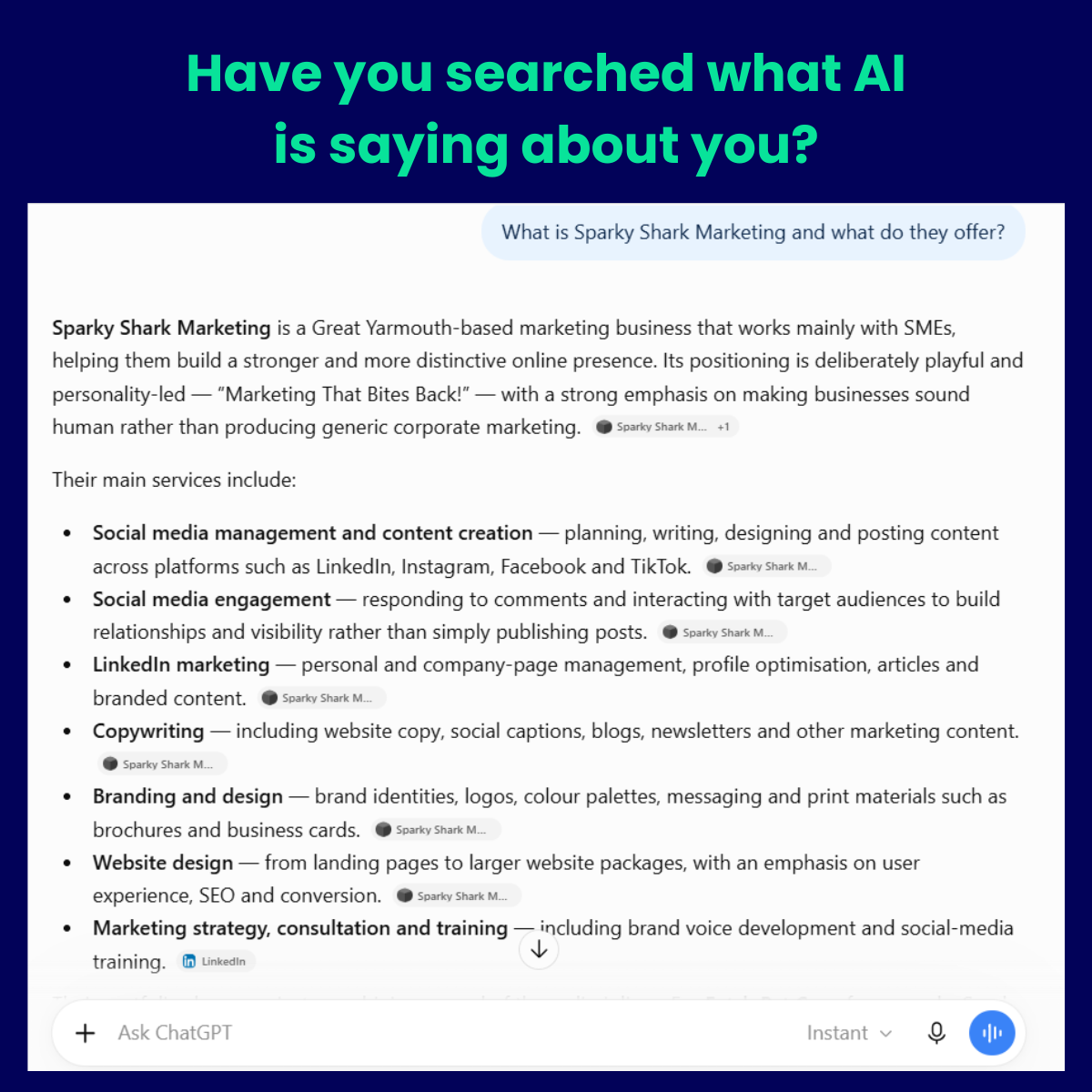
Semrush ran the study with extra data from LinkedIn, so keep that in mind. But the message for business owners is hard to argue with. Every helpful post you publish does two jobs. It builds trust with the people reading it, and it gives AI tools something useful to quote when your buyers come asking.
We dug into how LinkedIn fits into your go to market strategy in our blog on how to organically market your business on LinkedIn in 2026, including how to get your profile, content pillars and posting rhythm working together.
Organic LinkedIn marketing is what we do best at Sparky Shark. Personal profiles, company pages, content strategy and engagement, all built around one idea: people buy from people they trust.
On to the updates.
🦈 Verification gets the colleague seal of approval
On 23 September, LinkedIn announced a new batch of trust tools.
Here's the catch of the day.
⚡ Colleague vouching
LinkedIn is introducing a way for your past and present colleagues and classmates to vouch for your work experience. To give a vouch, they need a verified profile, at least a year of being connected to you, and two factor authentication switched on. Get enough confirmations and LinkedIn adds a verification badge to your profile, which you can hide if you'd prefer. Might be time to be extra nice to your old colleagues.
⚡ Kicking out the fakes
Nobody wants an imposter fin sneaking into their shoal, or a total stranger listing themselves as your head of sales. Admins of verified company pages can now remove profiles falsely claiming to work there. It won't change the person's own profile, but their listing loses the clickable link to your page, and the job stops showing as verified. For now, it's focused on full-time employees rather than contractors.
⚡ The catch
It's only for verified company pages at the moment. LinkedIn says eligibility for page verification may be based on "meaningful engagement with LinkedIn, such as posting regularly", alongside things like running LinkedIn ads or paying for a Premium Company Page.
These tools have plenty to do
LinkedIn's latest EU transparency report showed a 46% jump in detected inauthentic activity in the first half of 2026 compared with the six months before. That's almost half as much again in six months, on a platform with 56.5 million active users in the EU alone.
For scale, LinkedIn has already verified 115 million members, which is more than one and a half times the population of the UK, plus over 700,000 companies.
What this means for you:
⚡ Verify your personal profile if you haven't yet. It's free, and it's becoming a bigger trust signal every month.
⚡ Manage a company page? Check who's claiming to work for you and see whether your page is eligible for verification.
⚡ Spot that regular posting gets a mention in the eligibility criteria. Showing up consistently pays off in more ways than one.
🦈 Comments are getting a glow up
LinkedIn has changed how it ranks comments. Instead of everyone seeing the same order, you'll now see comments based on how relevant they are to you, using signals like your professional interests, connections and engagement activity.
There's a reason LinkedIn is fussing over comments.
Its Q2 report showed an 18% year over year rise in time spent in post comments. For every five minutes people spent reading comments this time last year, they're now spending nearly six. Overall content consumption was up 10% year over year too.
What this means for you:
The comments section is prime real estate (beachfront, obviously). A thoughtful comment on a post your ideal client is reading can put you in front of them without you posting a thing. And with comments now ranked by relevance, a smart one has a better chance of reaching the people who care about your topic.
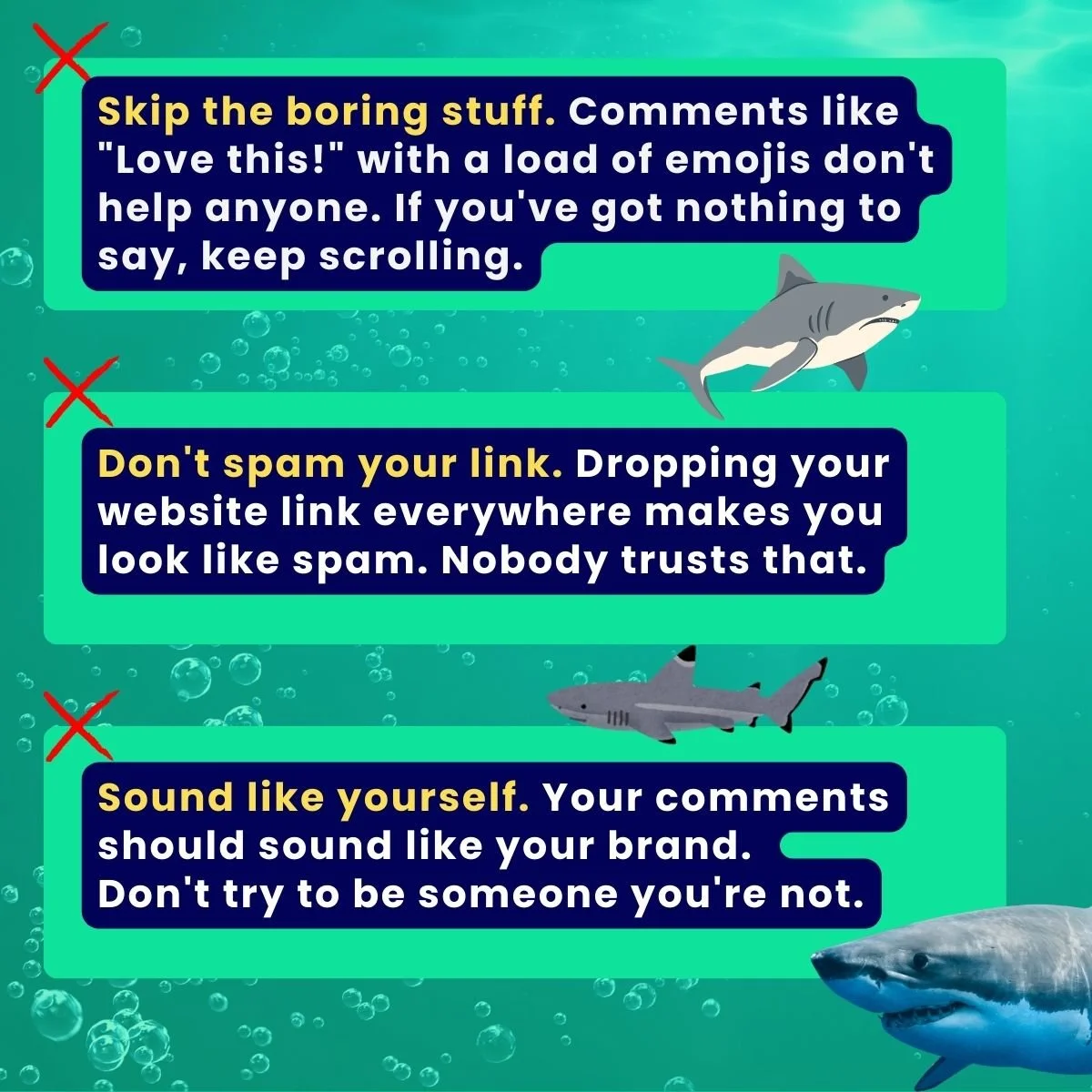
⚡ Bring something to the table. Share an experience, ask a question, or respectfully disagree. A lazy "Great insights! 👏" will sink straight to the seabed, where it belongs.
⚡ Reply to every comment on your own posts. Someone stopped scrolling to talk to you and ghosting them is not a good look.
⚡ Spend 15 to 30 minutes engaging before and after you post.
We've banged this drum before in our blog on why engagement deserves as much love as your content, and these updates only make the drum louder.
And no, you don't have to do it all yourself.
Nobody expects the CEO to reply to every comment between meetings. Our engagement service puts real humans in your comments, replying, chatting with your target audience and building friendships for your brand. Every comment comes from a person who has read the post.
🦈 A new Network tab (for some of you)
LinkedIn is testing a Network tab as an alternative to the main feed. Forget the usual lucky dip of creators, recommended accounts and whatever the algorithm reckons you'll like this week. This one only shows posts from your direct connections and the people you follow.
LinkedIn's chief product officer Hari Srinivasan summed it up: "We all want more real connection with real people."
Can't find it? Don't panic, you haven't been left out of the shoal. It's a limited test, and LinkedIn hasn't said who's getting it or for how long.
LinkedIn has dipped a fin in these waters before. In early 2025 it tested a "My Network" tab that did something very similar, and in June this year it trialled topic based suggested feeds. Neither made it to a wider launch, so this one could sink or swim.
What this means for you:
If it sticks, you'll have two audiences: the people who already follow you and know what you're about, and the strangers finding you in the main feed who haven't got a clue who you are yet.
🦈 Look after the people already in your network. Reply to their comments, show up on their posts and keep feeding them content that's useful to them.
🦈 Grow a network of people you'd love to work with. When you send a connection request, add a personal note so they know why you're reaching out. And don't pitch in the first message. Nobody has ever fallen for a sales pitch from a stranger in their DMs, hook, line and sinker.
🦈 Keep writing for newcomers too. Every post should give a stranger enough context to understand who you help and why they should care.
🦈 The AI slop button has teeth
On 30 July, LinkedIn slipped a new option into the three-dot menu on every post and comment. It reads "Seems like AI slop", and there's nowhere for the robots to hide.
People didn't hang about. By 20 August, more than a million users had clicked it, according to Srinivasan.
Cue the dramatic music, because this button bites.
Members were seeing 40% fewer views on content LinkedIn classed as AI slop compared to a few weeks earlier. For every ten views a slop post used to get, it now gets about six.
In fairness, the button isn't doing all the chomping on its own.
LinkedIn launched new classifiers (tools that sniff out slop and low-quality posts) on the same day, so that drop comes from both working together as one very hungry team.
Been flagged? LinkedIn is adding a message to let authors know when "Some members told us this post seems like AI." Ouch.
Before you start sweating through your shirt, Srinivasan said no single piece of feedback decides how a post gets shown, and there are safeguards to stop people using the button to unfairly target others. One grumpy reader with a vendetta won't sink your ship.
Why the crackdown?
AI detection startup Pangram Labs analysed 57,000 public LinkedIn posts and found that 30% of comments posted between April and June this year were entirely AI generated.
That's three in every ten comments with the lights on and nobody home.
What this means for you:
⚡ Write posts only you could write, full of your stories, your opinions and your slightly chaotic way of explaining things. A robot has never spilt coffee on its keyboard five minutes before a client call.
⚡ Using AI? No judgement from us. Plenty of people use it for research or spotting typos. Keep your hands on the pen for the writing, though. Readers can sniff out a copy and paste job faster than a shark can smell a drop of fish oil.
In a world full of AI, authenticity counts for more than ever. We're a little bit obsessed with this at Sparky Shark, because the whole business started with one very human (and very silly) LinkedIn post.
🦈 Goodbye "enhance", hello Post Proofreader
LinkedIn has binned its AI powered "enhance your post" option and swapped it for a new tool for Premium users called Post Proofreader.
The old tool could rewrite your posts for you. The new one tidies up something you've already written. Think of it as the friend who tells you there's spinach in your teeth, rather than the one who gives you a full makeover without asking.
Suggestions show up as tracked changes, much like Microsoft Word, so you can see exactly what's been edited. You decide whether to keep the changes or throw them back into the sea.
There are three options to pick from: review, shorten or clarify.
What this means for you:
⚡ On Premium? Use Post Proofreader as a final sweep and check every suggestion before you accept it. Some "fixes" can sand the personality off a sentence faster than you can say "synergy".
⚡ Not on Premium? Read your post out loud before you hit publish. If it doesn't sound like you chatting over a coffee, keep tweaking until it does.
🦈 So, what should you do next?
You don't have to tackle all of this at once. Pick one change from this blog, try it this week and see what happens to your reach. Then pick another.
LinkedIn is swimming in one clear direction: more trust, more conversation and fewer bots.
That suits business owners with a personality to share down to the ground. It's less exciting for anyone hoping a robot could do the whole job while they had a nap.
If your LinkedIn feels more goldfish than great white, or you've got plenty to say but can't find the words, give us a shout. We try not to bite.
🦈 sarah@sparkysharkmarketing.co.uk
Which of these LinkedIn updates are you most likely to try first?
Sources
Semrush, G2, Social Media Today, TechCrunch, Fortune, Moneywise, Business Wire
