50 years of Jaws and why Hollywood sharks are nothing like real ones
Jaws, scaring children and adults all across the world.
This year marks 50 years since Steven Spielberg unleashed "Jaws" upon the world, and whilst we're all for a good thriller, it's about time we set the record straight about our magnificent ocean predators.
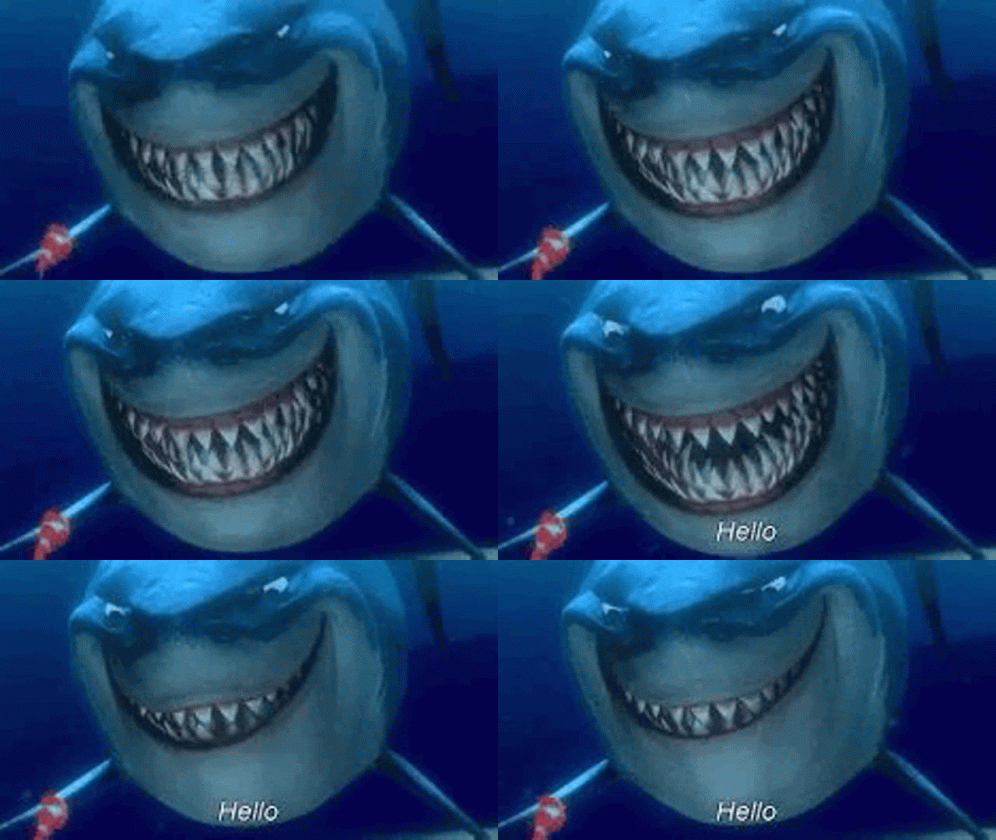
Yes, Bruce (that's what the mechanical shark was called, named after Spielberg's lawyer – because nothing says "terrifying apex predator" quite like legal representation) scared the living daylights out of cinema audiences in 1975. But the film's portrayal of sharks is about as accurate as your mate Dave's fishing stories after a few pints.
The film that made everyone afraid to go swimming
"Jaws" didn't create the summer blockbuster; it created a whole generation of people who won't even paddle in a bathtub without checking for fins first. The film follows a massive great white shark terrorising the fictional Amity Island, chomping through swimmers like they're going out of fashion.
What actually happened behind the scenes? The mechanical sharks were such unreliable pieces of kit that Spielberg barely showed them in the film. Originally scheduled for a 55-day shoot, the production dragged on for 159 days because Bruce kept breaking down in the salt water.
🦈 The shark was supposed to be 25 feet long and weigh three tonnes
🦈 In reality, the largest great whites are about 6 metres and 2 tonnes
🦈 The mechanical shark weighed 1.2 tonnes and cost £250,000 to build
🦈 It was so temperamental that "You're gonna need a bigger boat" became the crew's catchphrase for everything going wrong
🦈 Bruce became so iconic that Pixar named Finding Nemo's friendly shark after him
Fiction vs reality: What Jaws got wrong
Whilst Jaws makes for awesome entertainment, it's about as scientifically accurate as claiming fish and chips cure hangovers.
🦈 Size matters
The Jaws shark is supposedly a 25-foot male great white. Problem is that all the biggest great whites are female. Males typically max out around 4 metres, whilst the ladies can reach 5-6 metres.
🦈 Hunting behaviour
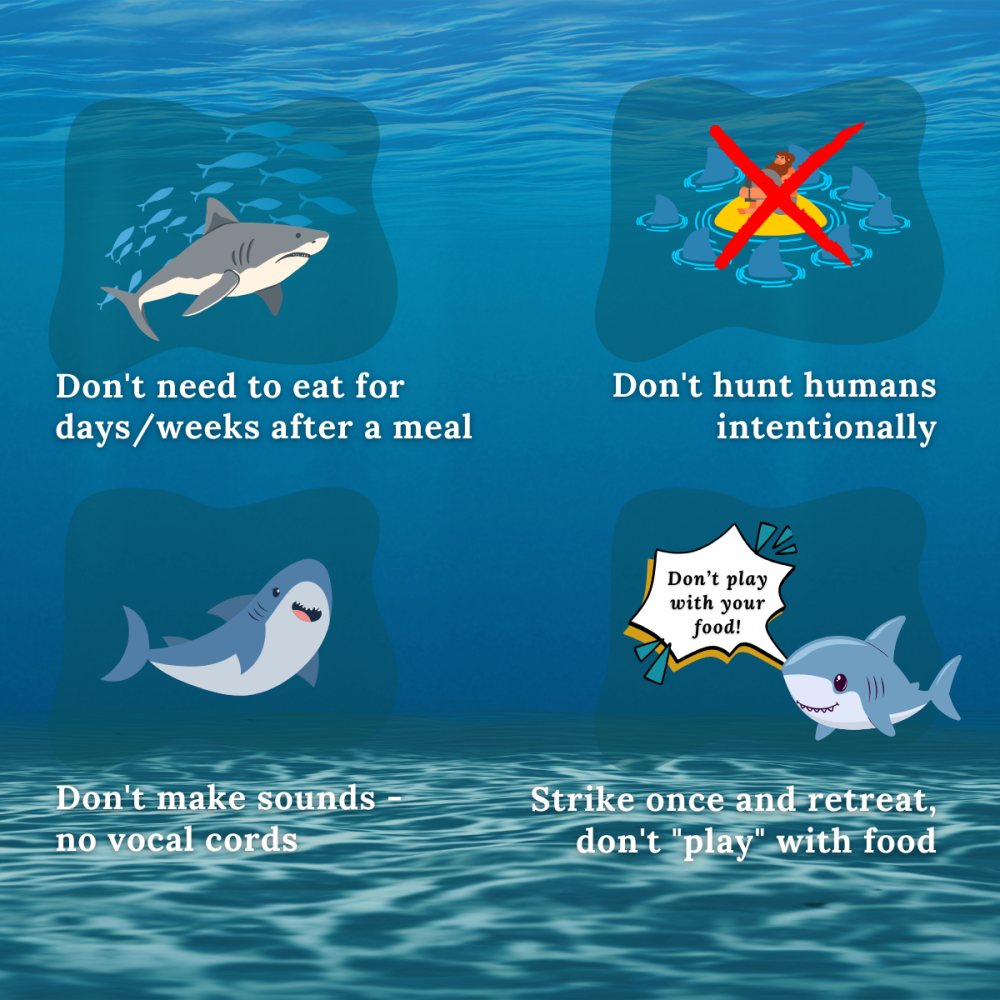
In the film's opening scene, poor Chrissie gets dragged around the surface before being pulled under. Real great whites? They're more like underwater assassins. They sneak up from below and deliver one or two devastating blows at lightning speed. They don't play with their food; they're efficient killers who strike once and retreat.
🦈 The feeding frenzy myth
The Jaws shark munches through five people over several days. In reality, after a decent meal (like a nice fat seal), a great white won't need to eat again for days or even weeks. They're not swimming around constantly looking for their next human snack, they've got better things to do.
🦈 The silent treatment
All those dramatic roars and growls in the film? Complete nonsense. Sharks don't have vocal cords. They're the strong, silent types of the ocean. The only shark species known to make noise are rigs (a type of houndshark from New Zealand), and they click their teeth when stressed.
🦈 The ocean's most essential predators
What Jaws didn't tell you: sharks are crucial for healthy marine ecosystems. They're like the ocean's quality control team, keeping fish populations balanced and marine environments thriving.
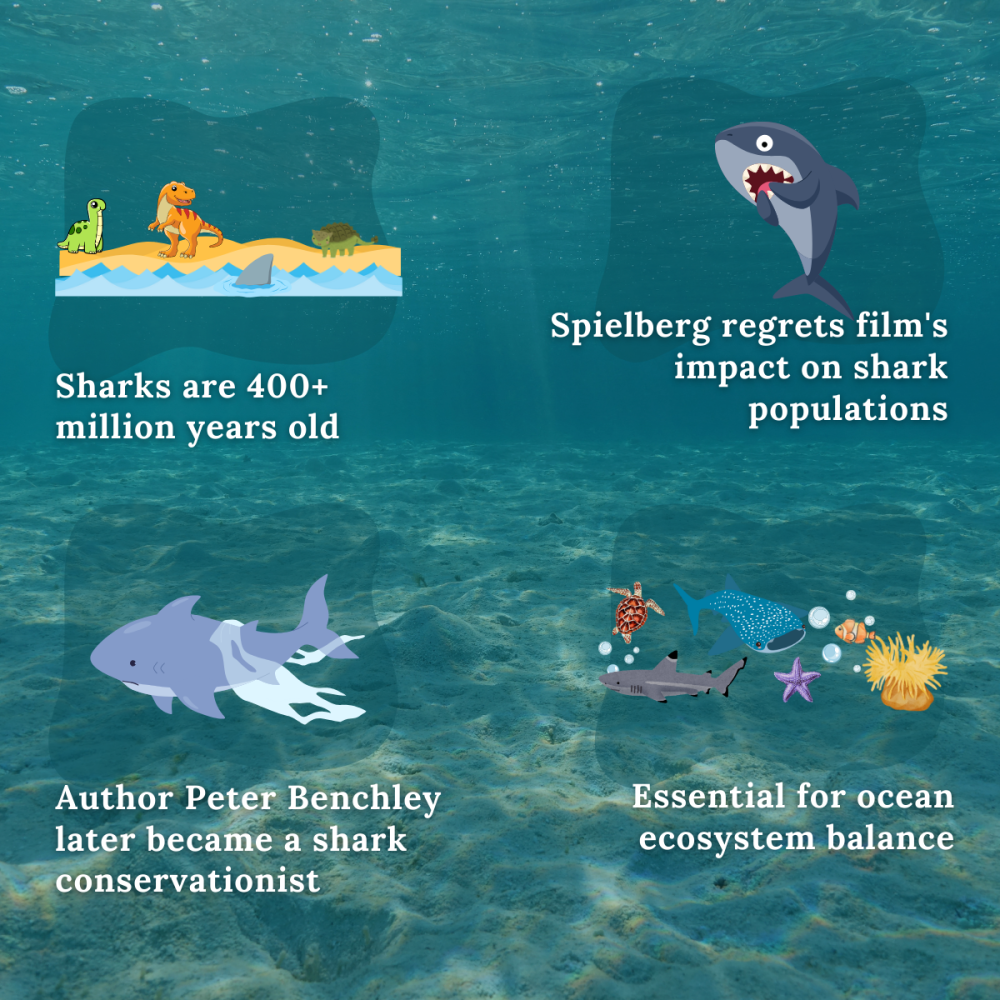
🦈 Sharks have been around for over 400 million years - they've survived multiple mass extinctions
🦈 They help maintain the balance of marine food chains
🦈 Their presence indicates a healthy ocean ecosystem
The conservation crisis
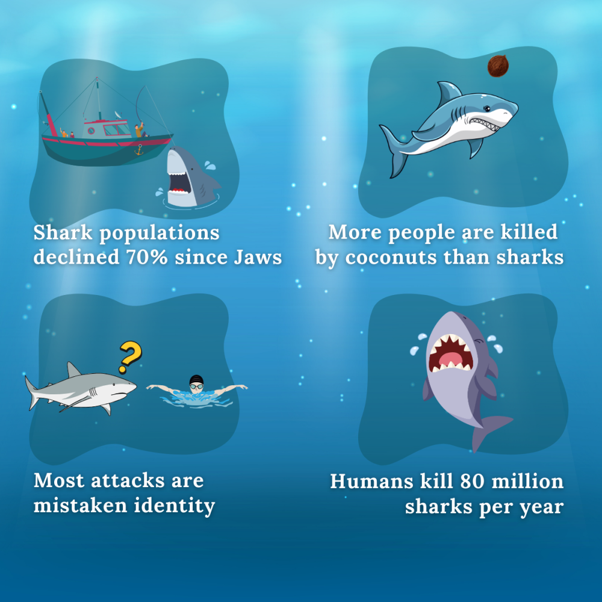
Since Jaws hit cinemas, shark populations have declined by over 70%. We're killing approximately 80 million sharks every year through fishing, whilst sharks kill about 4-5 humans annually worldwide. You're statistically more likely to be injured taking a selfie than being attacked by a shark.
Even Peter Benchley, who wrote the original novel, spent his later years campaigning for shark conservation. He publicly stated: "Knowing what I know today, I couldn't write the same book. I couldn't possibly demonise an animal the way I did."
Sharks: The ultimate misunderstood professionals
Think of sharks as the ocean's most efficient businesspeople. They've perfected their craft over millions of years:
⚡ Incredible senses: They can detect electrical fields from your heartbeat and muscle contractions when you're nearby
⚡ Perfect design: Their torpedo-shaped bodies and powerful tails make them supremely efficient swimmers
⚡ Sustainable hunting: They take only what they need and help keep marine ecosystems balanced
⚡ Diverse specialists: From tiny lantern sharks that glow in the deep to massive whale sharks that are gentle giants
The Jaws effect: When Hollywood meets reality
The film's impact was phenomenal, but not in a good way for sharks. Shark fishing tournaments sprung up across America, and the public's perception shifted from indifference to outright fear. Beach attendance dropped, and "Shark Week" became a cultural phenomenon built on sensationalism rather than education.
Even Spielberg himself has expressed regret about the film's impact on shark conservation. In 2022, he told BBC Radio 4: "I fear that sharks are mad at me for the feeding frenzy of crazy sword fishermen that happened after 1975."
Time for a new narrative
Fifty years on, it's time to give sharks the reputation they deserve. These magnificent creatures are facing extinction whilst we're still scared of an animatronic puppet that barely worked.
The next time someone mentions Jaws, remind them of these facts:
🦈 More people are killed by falling coconuts than shark attacks
🦈 Sharks attack humans roughly 80 times per year globally – bees kill far more people 🦈 Most shark "attacks" are cases of mistaken identity or defensive bites
🦈 Sharks often take one bite and retreat when they realise you're not a seal
Swimming towards a better future
Rather than fearing sharks, we should be celebrating them. They're essential for ocean health, which is essential for our planet's wellbeing. Climate change, plastic pollution, and overfishing are far greater threats to both sharks and humans than any fictional movie monster.
So as we mark Jaws' 50th anniversary, let's use it as an opportunity to educate rather than terrify. These incredible creatures have been perfecting their craft for hundreds of millions of years – they deserve our respect, not our fear.
The real story isn't about a monster shark hunting humans. It's about how humans have been hunting sharks to near extinction.
Our ultimate dream is to grow Sparky Shark Marketing big enough to support shark conservation charities and help protect these magnificent creatures that inspired our name. So, when you choose us for your marketing, you're not only getting jaw-some results for your business; you're swimming alongside us towards a future where we can give back to the ocean's most misunderstood predators.
🦈 Get in touch! We promise our marketing has more bite than Bruce ever did.
📩Sarah@sparkysharkmarketing.co.uk