
Why dolphins are scarier than sharks (and why humans are worse than both)
Two movies. Two animals. Two completely different reputations.
Jaws made sharks into monsters. Flipper made dolphins into heroes.
And both got it wrong.
So, we’re going to talk about how movies screwed up our understanding of marine life. And how humans turned out to be the real predators all along.
🦈What Jaws did to sharks
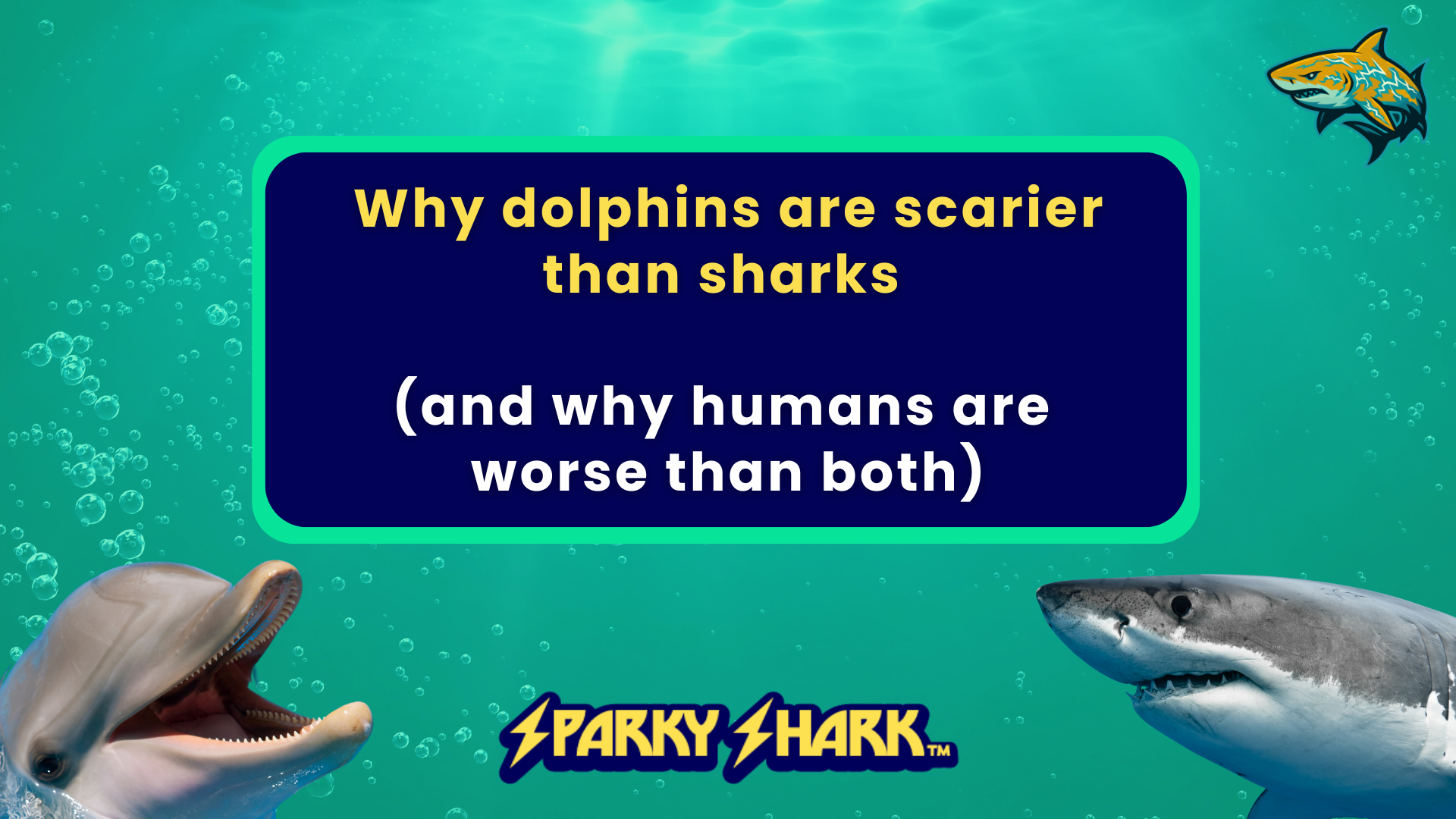
In 1975, Jaws hit cinemas and changed everything. Suddenly, sharks weren't just ocean predators, they were man-eating monsters lurking in every wave (or swimming pools).
The mechanical shark (nicknamed Bruce after Spielberg's lawyer) barely worked and cost £250,000. But it did its job. It terrified an entire generation.
The impact? Shark populations have declined by 70% since Jaws was released.
Even Peter Benchley, who wrote the original novel, spent his later years campaigning for shark conservation. He said he couldn't possibly demonise an animal the way he did. But the damage was done.
And if you want to learn more about Jaws and the impact on sharks, then click here for the blog.
🐬What Flipper did for dolphins
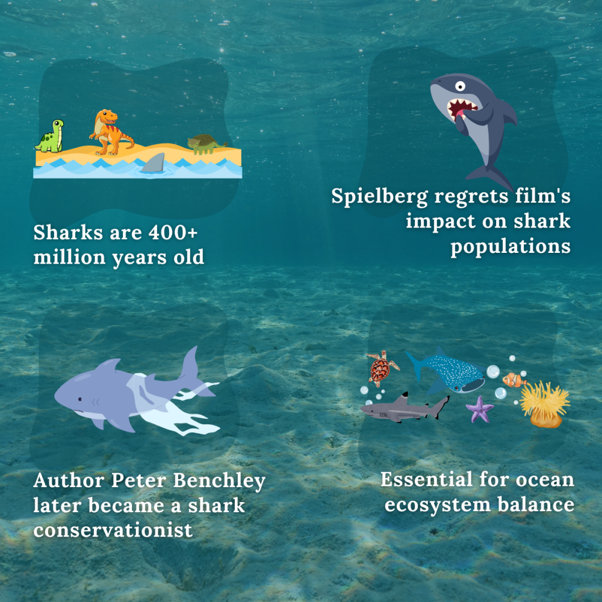
Then there's Flipper. The 1963 TV show and the 1996 movie remake told us dolphins were our friends. Smart, helpful, playful creatures who wanted nothing more than to swim alongside humans and save the day.
The story revolved around a boy named Sandy, who spends his summer in Florida and befriends a dolphin. They have adventures. Everyone's happy. It's the aquatic version of Lassie.
Sounds nice, right?
It wasn't.
Yes, the film filled our hearts with happiness and thoughts of dolphins, but there’s a lot that happened in the making of Flipper. This is where humans show exactly what kind of species we are.
🐬5 dolphins played Flipper
Kathy, Susie, Scotty, Patty, and Squirt. All female dolphins. They used females because they were less aggressive and looked better on camera. Males had scars from fighting.
All five lived in captivity at Miami Seaquarium. They showed signs of extreme stress - swimming in circles, floating lifelessly on the water due to boredom.
That's what captivity does. It breaks them.
🐬They were starved until they performed
Remember when Flipper would rise out of the water and walk on its tail? That signature move everyone loved?
The female dolphins couldn't learn it. So, they brought in a male dolphin named Clown specifically for that trick.
How did they teach him? Food deprivation. Starve them until they perform.
🐬Kathy committed suicide
Kathy was the main dolphin used for Flipper. One day, she was found covered in black blisters and barely moving.
Her trainer, Ric O'Barry, was called in. Kathy swam into his arms and died.
According to O'Barry, Kathy was depressed from the unnatural conditions of captivity. She forced herself to stop breathing. Dolphins are conscious breathers; every breath is a choice.
O'Barry ruled it a suicide. Dolphins are highly intelligent and self-aware.
That experience changed O'Barry. He left the animal entertainment industry and started the Dolphin Project. He's spent his life since trying to end dolphin captivity.
🐬A history of animal welfare violations
Flipper was filmed at Miami Seaquarium, one of the oldest marine amusement parks in the country.
Over the years, countless dolphins and marine animals have suffered and died there due to stress from performing, poor diets, and unnatural living conditions.
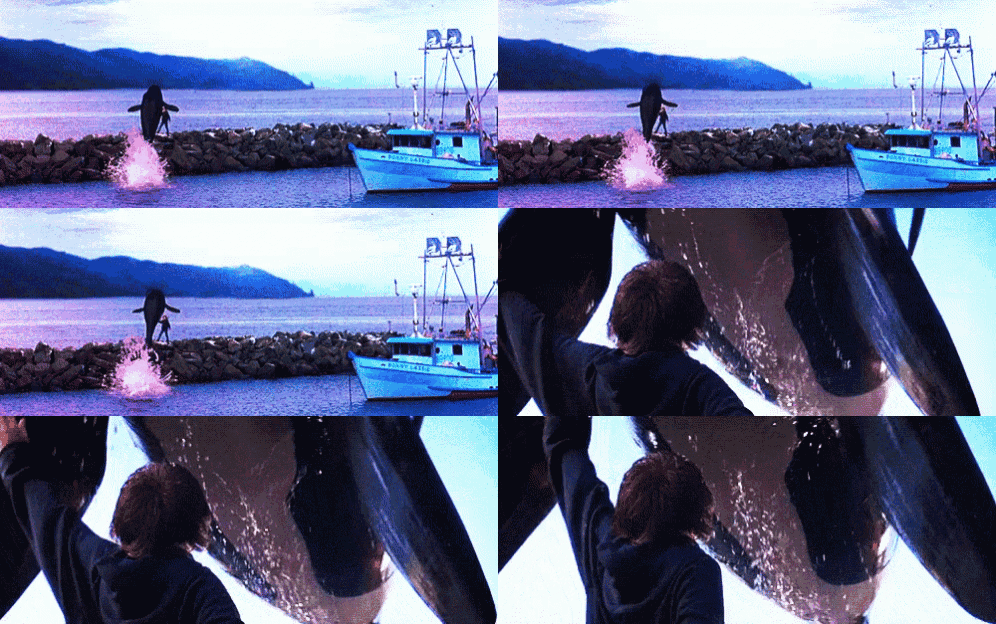
Don’t even get us started on Free Willy, otherwise this blog will never end.
🐬Why dolphins are scarier than sharks
And now it’s time to talk about why dolphins are scarier than sharks.
🐬Dolphins have 80-100 razor-sharp teeth
Common bottlenose dolphins have between 80 and 100 teeth designed to rip apart prey. And they use them on humans too.
U.S. officials have reported dozens of dolphin bites, with some victims pulled underwater.
🐬They attack with serious force
Remember Dusty from Ireland? Six years of friendly interactions with locals, then she attacked Valerie Ryan so violently that Ryan ended up with six spinal fractures, three broken ribs, a damaged lung, and post-traumatic stress. The news started reporting on this and warning swimmers about the dolphin.
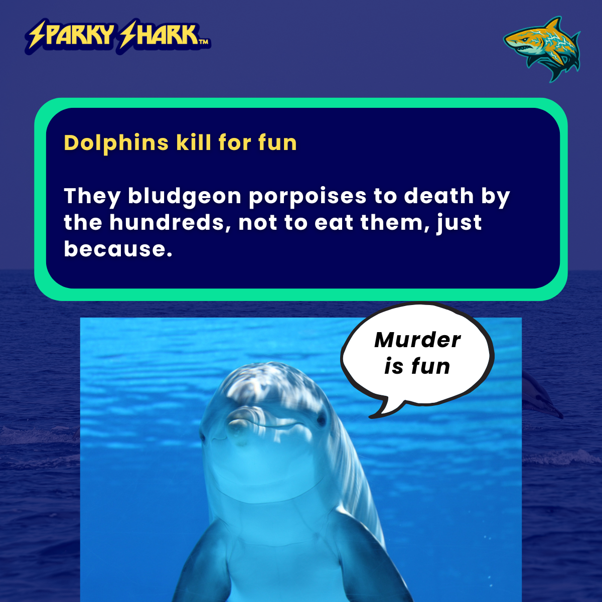
🐬They kill for fun
Most predators kill to survive. Dolphins kill for entertainment.
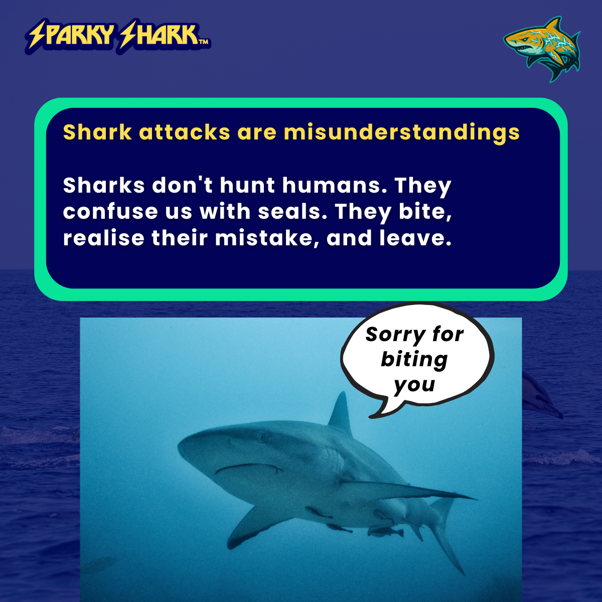
If a shark attacks you, it’s a mistake. But dolphins, they know what they’re doing.
The New York Times reported that dolphins are killing fellow mammals in droves, using their beaks as clubs. They've been found bludgeoning porpoises to death by the hundreds.
Not to eat them. Just because.
🐬They kill each other's babies
A 2002 study found nine bottlenose dolphin calves in Virginia that died from severe blunt-force trauma inflicted by adult dolphins. Multiple rib fractures, lung lacerations, bite wounds.
Infanticide isn't rare behaviour for dolphins.
🐬Male dolphins are violent towards females
A 1992 study found that male dolphins use physical violence during mating. Hitting with tails, head-jerking, charging, biting, and body-slamming females.
🐬They're massive and fast
Bottlenose dolphins grow 10-14 feet long and weigh around 1,100 pounds. They can travel up to 20 miles per hour.
For comparison, Olympic swimmer Michael Phelps tops out at just under six miles per hour.
🐬Dolphin attacks can kill
In 1994 in São Paulo, Brazil, two men were rammed by a dolphin. One died from internal injuries.
Trevor Spradlin, a federal dolphin expert, told the New York Times: "There's this misconception that they're friendly, that they're Flipper, that they want to play with people."
That misconception is dangerous.
Don’t get us wrong, we still like dolphins. But we’ll take sharks any day!
🧑🤝🧑Humans are worse than both
Want to know what the scariest predator in the ocean is? It's not sharks. It's not dolphins.
It's us.
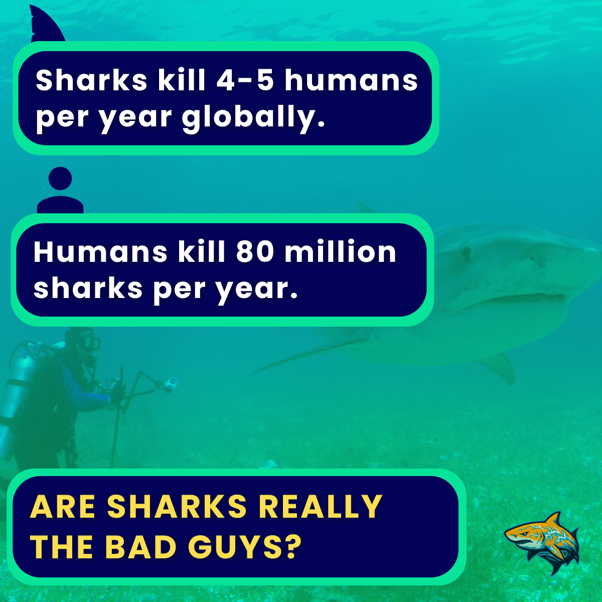
According to a study published in the journal Science, researchers looked at data from 2012 to 2019. Annual shark mortality rose from 76 million in 2012 to over 80 million in 2017.
Of those deaths, 25 million were threatened species. We're killing sharks that are already endangered.
🦈Legislation to protect sharks made it worse
Between 2012 and 2019, legislation to protect sharks from finning increased tenfold. You'd think that would help.
It didn't. Shark deaths increased.
Why? Because now that finning regulations exist, fishers started keeping the whole shark instead of just the fins. This opened up new markets for shark meat.
The legislation might have incentivised shark fishing in certain areas because of the new demand for shark meat.
🦈The shark trade is worth billions
A WWF report estimated the global trade in shark and ray meat could be worth $2.6 billion between 2012 and 2019.
In 2000, the market was worth $157 million. By 2011, it had risen to $379.8 million. Now? $2.6 billion.
There's serious money in killing sharks. And that's the problem.
🦈Why we need to change the narrative
Two movies shaped how we see marine life. Jaws made sharks into villains. Flipper made dolphins into heroes.
Both were wrong. And both had real consequences.
Sharks aren't mindless killers. They're apex predators that have survived for over 400 million years by being perfectly adapted to their environment.
They keep marine ecosystems healthy. They protect seagrass meadows that store carbon 35 times faster than rainforests. Without sharks, the ocean collapses.
Dolphins aren't friendly helpers. They're complex, intelligent, and sometimes violent wild animals who deserve respect, not anthropomorphised worship or captivity.
And humans? We're the ones killing 80 million sharks a year.
🦈Want content that challenges assumptions?
At Sparky Shark Marketing, we create content that makes people think. Content that challenges the narrative. Content that gets people talking.
We don't do generic. We create blogs, social media content, and marketing copy that sounds like you.
If you want content that educates, entertains, and converts…then get in touch.
📩sarah@sparkysharkmarketing.co.uk
***Disclaimer: This blog was not endorsed by sharks who wanted to give dolphins any bad press.
Are you team dolphin or team shark?🦈🐬
